The landscape of customer loyalty is undergoing a significant transformation, driven by the pervasive adoption of mobile technology. In 2026, QR-based loyalty software has emerged as a preferred engagement mechanism, fundamentally shifting how businesses connect with their customers. This article is designed for marketing leaders and business owners in retail, FMCG, automotive, and hospitality sectors planning to launch or scale QR-based loyalty campaigns with expected scan volumes exceeding 10,000 per month. The shift from traditional card-based programs to mobile-first QR solutions is propelled by consumer demand for seamless, contactless experiences and businesses' need for efficient, data-rich engagement tools. We will explore the market forces driving this adoption across various industries.
1. Global Market Size and Revenue Projections for 2026
The global market for QR codes, which underpins QR-based loyalty solutions, is experiencing robust growth. Valued at $1.5 billion in 2023, it is projected to reach $3.5 billion by 2033, demonstrating an 8.7% CAGR, according to Data Insights Market. Another estimate places the global QR code market at $15.23 billion in 2026, growing at a 16.82% CAGR to $33.14 billion by 2031, as reported by Mordor Intelligence.
 Photo by iMin Technology
While specific global market size for QR-based loyalty software alone is not directly isolated, the broader customer loyalty program software market, encompassing QR-integrated solutions, was valued at $4 billion in 2024 and is forecasted to hit $12 billion by 2032 with a 15% CAGR, per OpenPR. North America holds the largest share in the overall loyalty management market, with a 36.5% revenue share in 2025, according to Mordor Intelligence. However, Asia-Pacific is emerging as the fastest-growing region, projected to reach $12.16 billion by 2031 at a 20.62% CAGR, Mordor Intelligence data indicates. Dynamic QR codes, crucial for loyalty tracking and analytics, represent 65% of the market share in 2024 and are growing at a 19.2% CAGR through 2030, as per Mordor Intelligence.
2. India's QR Loyalty Market: A High-Growth Spotlight
India stands out as a high-growth market for QR-based loyalty platforms. The India loyalty program market is valued at approximately $4.3 billion in 2025, projected to reach $17.1 billion by 2035 at a 16.1% CAGR, according to Future Market Insights. Another estimate values the market at $4.07 billion in 2026, growing to $7.18 billion by 2030 at a 15.3% CAGR, per Research and Markets. Driving factors include India's immense smartphone penetration, with 659 million smartphone users representing a 46.5% penetration rate, as reported by GrabOn. The robust digital payment infrastructure, particularly UPI, with over 709 million active UPI QR codes as of late 2025, according to Brand Equity, further fuels this growth. Government initiatives supporting digital transactions also play a significant role. Industries leading QR loyalty adoption in India include retail, automotive, FMCG, and quick-service restaurants. Indian brands are processing lakhs of QR scans for customer engagement campaigns, demonstrating the need for scalable solutions. LoyaltyNest, for instance, is built to process over one lakh QR scans in minutes, making it ideal for large-scale customer engagement in this market.
3. Key Growth Drivers Fueling Market Expansion
Several factors are converging to accelerate the adoption of QR-based loyalty software. These drivers underscore the strategic importance of this technology for businesses aiming to enhance customer retention and acquisition.
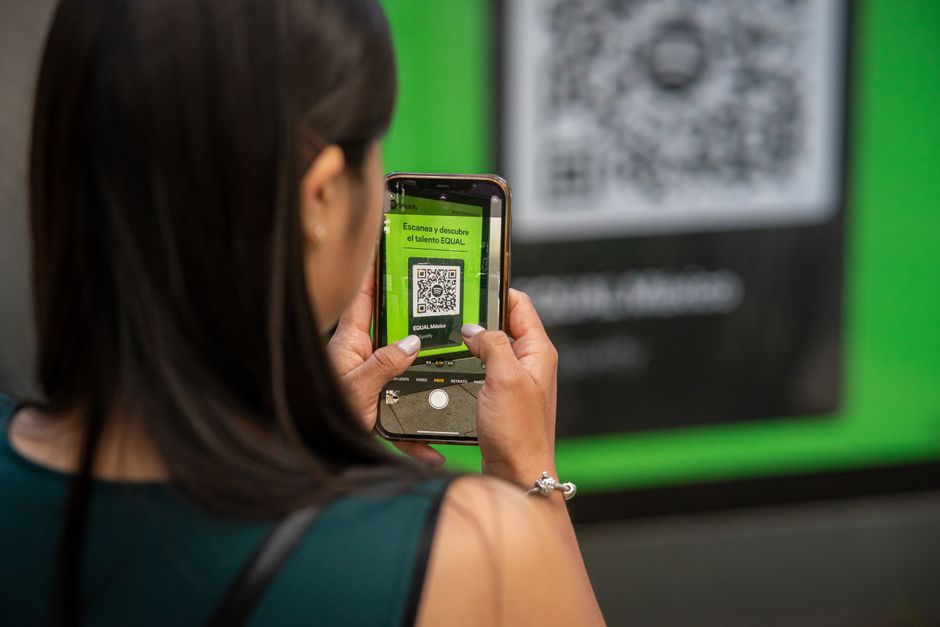 Photo by Julio Lopez
-
Contactless Engagement Preferences: Post-pandemic consumer behavior has solidified a preference for contactless interactions, making QR codes a natural fit for loyalty programs. Global contactless transactions are projected to reach $15.7 trillion by 2029, a 113% increase from 2024, as per Juniper Research.
-
Cost Advantages: QR programs offer significant cost savings compared to physical card production and distribution, or the development and maintenance costs associated with app-download requirements. They provide an efficient, low-overhead solution for customer engagement.
-
Integration with Digital Payment Ecosystems: Seamless integration with existing digital payment systems like UPI and mobile wallets enhances convenience for customers and streamlines rewards redemption. QR code payments are projected to reach $61.73 billion by 2033, growing at a 20% CAGR from 2025, according to Grand View Research.
-
Data Collection and Analytics Capabilities: Dynamic QR codes enable rich data collection, allowing businesses to gather insights into customer behavior and personalize rewards at scale. Marketers prioritize unique users (54%), conversion rate post-scan (52%), and total scans (50%) as key metrics, according to a Bitly survey.
QR-Based vs. Traditional Loyalty Program Approaches: 2026 Comparison
This table compares QR-based loyalty solutions against traditional loyalty program methods across key business criteria, helping decision-makers understand the operational and cost advantages of QR technology in 2026.
|
Criteria |
QR-Based Loyalty Programs |
Card-Based Programs |
App-Download Programs |
SMS/USSD Programs |
|
Customer onboarding friction |
Very low (scan & register) |
Medium (physical card issuance, form filling) |
High (app download, registration) |
Medium (SMS opt-in, code memorization) |
|
Implementation cost per customer |
Very low (digital codes, minimal physical material) |
High (card printing, distribution) |
Medium to High (app development, updates) |
Low (SMS gateway costs) |
|
Scalability for high-volume campaigns |
Excellent (digital distribution, rapid processing) |
Limited (physical card logistics) |
Good (server scalability) |
Good (SMS platform capacity) |
|
Real-time data capture capability |
Excellent (instant scan data, analytics) |
Low (batch processing, delayed data) |
Excellent (in-app behavior tracking) |
Limited (basic redemption data) |
|
Integration with digital payments |
Excellent (seamless UPI/wallet integration) |
Low (separate payment process) |
Good (in-app payment options) |
Limited (requires separate payment) |
|
Hardware/infrastructure requirements |
Minimal (smartphone cameras, existing POS) |
Medium (card readers, POS integration) |
Medium (app hosting, server infrastructure) |
Minimal (SMS gateway) |
4. Technology Capabilities Defining Market Leaders
The effectiveness of QR-based loyalty solutions hinges on robust technology. Market leaders in 2026 are defined by their ability to deliver high-performance, integrated, and secure platforms.
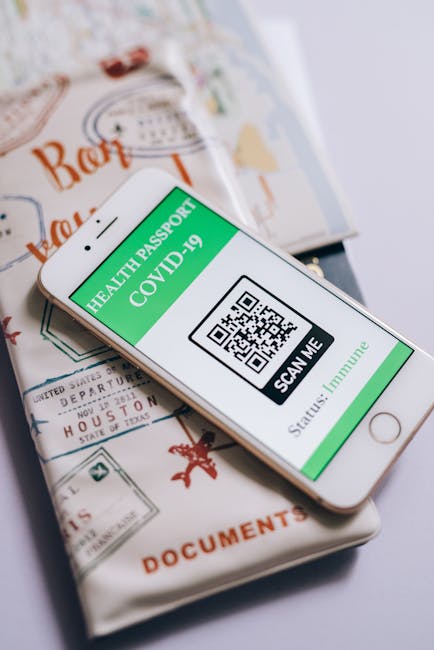 Photo by Leeloo The First
-
High-Volume QR Scan Processing: Leading platforms must handle immense transaction volumes, validating 100,000+ QR scans within minutes. This capability is critical for large-scale campaigns in high-traffic retail or FMCG environments. LoyaltyNest, for example, is designed to process over one lakh QR scans in minutes, a testament to CFCS Cloud Solutions' expertise in enterprise-grade systems.
-
Real-time Fraud Detection and Duplicate Scan Prevention: With the rise of "quishing" (QR phishing) and fraudulent activities, robust security measures are paramount. Systems must include real-time fraud detection, duplicate scan prevention, and geolocation verification to maintain program integrity. QR code phishing attacks surged to 51% in a recent period, highlighting the need for advanced security, according to QR Code Tiger.
-
Omnichannel Integration: Connecting in-store QR scans with online customer profiles creates a unified view of the customer journey. This enables personalized experiences across all touchpoints, from purchase to redemption.
-
API-First Architectures: Modern platforms feature API-first designs, enabling rapid deployment and seamless integration with existing CRM systems, marketing automation tools, and other business applications. This flexibility allows businesses to adapt loyalty programs to diverse touchpoints.
5. Industry-Specific Adoption Patterns and Use Cases
QR-based loyalty programs are proving versatile across a range of industries, each leveraging the technology for specific engagement goals. The adaptability of these solutions makes them invaluable for diverse business needs.
 Photo by Walls.io
-
Retail and E-commerce: QR codes facilitate product registration, purchase validation for points or cashback, and instant loyalty enrollment at checkout. They also power in-store promotions and personalized offers.
-
Automotive: Brands use QR codes for warranty registration, service history tracking, and owner loyalty initiatives, providing seamless access to vehicle information and exclusive benefits.
-
FMCG: On-pack QR codes are pivotal for consumer engagement campaigns, anti-counterfeiting measures, and instant win promotions. They allow brands to directly connect with consumers at the point of consumption.
-
Hospitality and QSR: Restaurants and hotels employ QR codes for dine-in rewards, takeaway promotions, digital menus with integrated loyalty, and membership programs, enhancing the guest experience.
6. Competitive Landscape and Market Consolidation Trends
The QR-based loyalty software market in 2026 is characterized by both established global players and agile regional specialists. The broader loyalty market reached $93.2 billion in 2026 and is forecast to grow at a CAGR of 13.3% through 2030, according to a report by GlobeNewswire.
 Photo by iMin Technology
Market consolidation is occurring through platform integration and strategic partnerships rather than traditional M&A activities, as companies prioritize end-to-end customer journeys. Enterprise loyalty platforms are increasingly adding robust QR capabilities to their offerings, while QR-native solutions are expanding their feature sets to compete. Brands like LoyaltyNest, built by CFCS Cloud Solutions, are positioning themselves as leaders in high-volume markets by focusing on scalability and localized features.
Key Takeaways
-
The global QR code market, a proxy for QR loyalty, is projected to reach $15.23 billion in 2026, driven by contactless engagement.
-
India is a high-growth region, with its loyalty market valued at $4.07 billion in 2026, fueled by smartphone penetration and UPI integration.
-
Enterprise-grade platforms must handle 100,000+ QR scans per minute, essential for large-scale campaigns.
-
QR loyalty offers significant cost advantages and superior data collection compared to traditional methods.
-
Fraud detection, omnichannel integration, and API-first architectures are critical features for market leaders.
7. Conclusion: Market Outlook and Strategic Recommendations
The QR-based loyalty software market is poised for significant growth over the next five years, driven by evolving consumer preferences and technological advancements. Businesses evaluating loyalty solutions should prioritize platforms that offer robust, scalable QR capabilities, particularly in high-volume markets like India. LoyaltyNest, for instance, provides the enterprise-grade stability and high-volume processing required for such demanding environments. When selecting a QR loyalty platform, consider its ability to process a high volume of scans, integrate seamlessly with existing systems, and provide real-time analytics and fraud prevention. For businesses like those in FMCG or retail, where hundreds of thousands of daily interactions are common, platforms with proven scan-processing capabilities are not just an advantage but a necessity. The future of customer engagement is mobile and instant, and QR-based loyalty is at its forefront.
FAQs
QR codes are more popular than loyalty cards due to their reduced customer friction, lower implementation costs, and superior data collection capabilities. They eliminate the need for physical cards, aligning with mobile-first consumer behavior and enabling real-time engagement.
Enterprise loyalty platforms can process and validate 100,000+ QR scans within minutes, a critical benchmark for scalability. This high-volume processing capability is essential for large-scale campaigns in markets with extensive consumer engagement.
Retail, FMCG, automotive, and hospitality are adopting QR-based loyalty programs the fastest. Retailers use them for purchase validation, FMCG for on-pack promotions, automotive for warranty tracking, and hospitality for dine-in rewards and membership programs.
The global QR code market, which provides the foundation for QR-based loyalty software, is valued at $15.23 billion in 2026 and is projected to grow at a 16.82% CAGR to $33.14 billion by 2031,
according to Mordor Intelligence. India's loyalty program market alone is estimated at $4.07 billion in 2026, per Research and Markets.
QR loyalty software growth in India is driven by high smartphone penetration (46.5% of the population), robust digital payment infrastructure like UPI with over 709 million active QR codes, and government initiatives promoting digital transactions. The cost-effectiveness of QR solutions also suits India's price-sensitive market.